

Technology News
Technology News
Agentic AI in Retail: How Autonomous Shopping Is Redefining the Customer Journey
As agentic AI transforms retail economics, industry leaders will compete for shoppers and agents alike.
At a Glance
Agentic AI is disrupting the shopper journey as third-party agents disintermediate the top of the funnel. Even so, consumers trust retail-owned agents three times more to complete transactions.
Today, AI accounts for up to a quarter of referral traffic for some retailers, yet it is still less than 1% of their total traffic.
Leading retailers will build on-site agents that respond to shoppers’ intent and help them navigate purchase complexity, but they will also partner with third-party agents to be where shoppers are.
Going forward, winning retailers will invest in their on-site value proposition, reinvent retail media, and protect control over data, fulfillment, and checkout where possible to avoid commoditization.
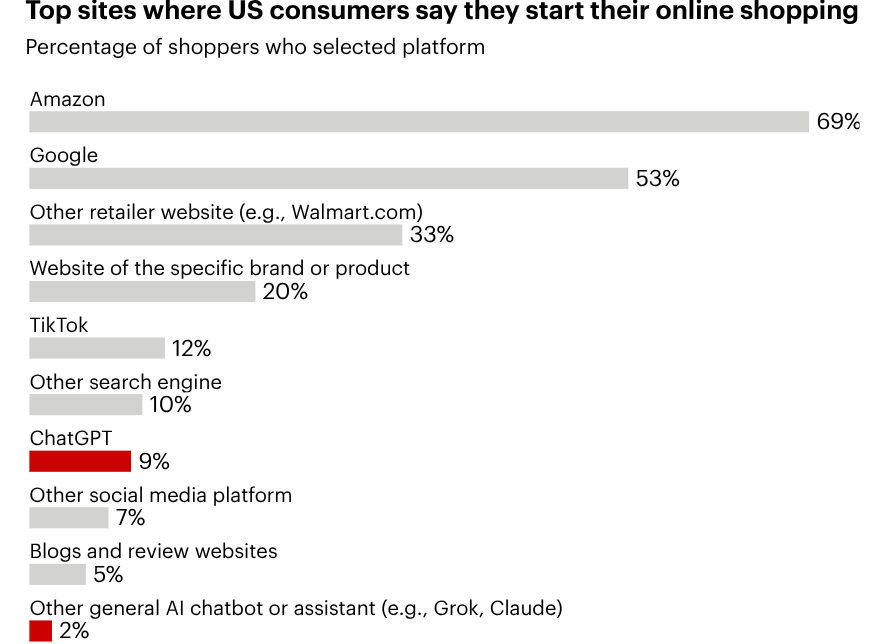
Throughout the purchase process, AI agents are starting to take on the heavy lifting for consumers: recommending options, hunting for deals, checking stock for hot items, and finding smart substitutions.
Agentic AI—a set of autonomous systems that acts on a user’s behalf—has the potential to reshape every step of the shopper journey from research to purchase. While timing and depth of adoption are uncertain, autonomous agents are already redefining the rules of search, advertising, personalization, fulfillment, payments, and post-purchase support. The choices retailers make now will determine whether they shape the future or are sidelined by it.
AI now accounts for up to a quarter of referral traffic for some retailers, but it is still less than 1% of total traffic. Even so, as ChatGPT and Perplexity move away from instant checkout and consumers increasingly rely on LLMs for search and discovery, winning the referral is becoming more important than ever.
SOURCE: Bain Insights